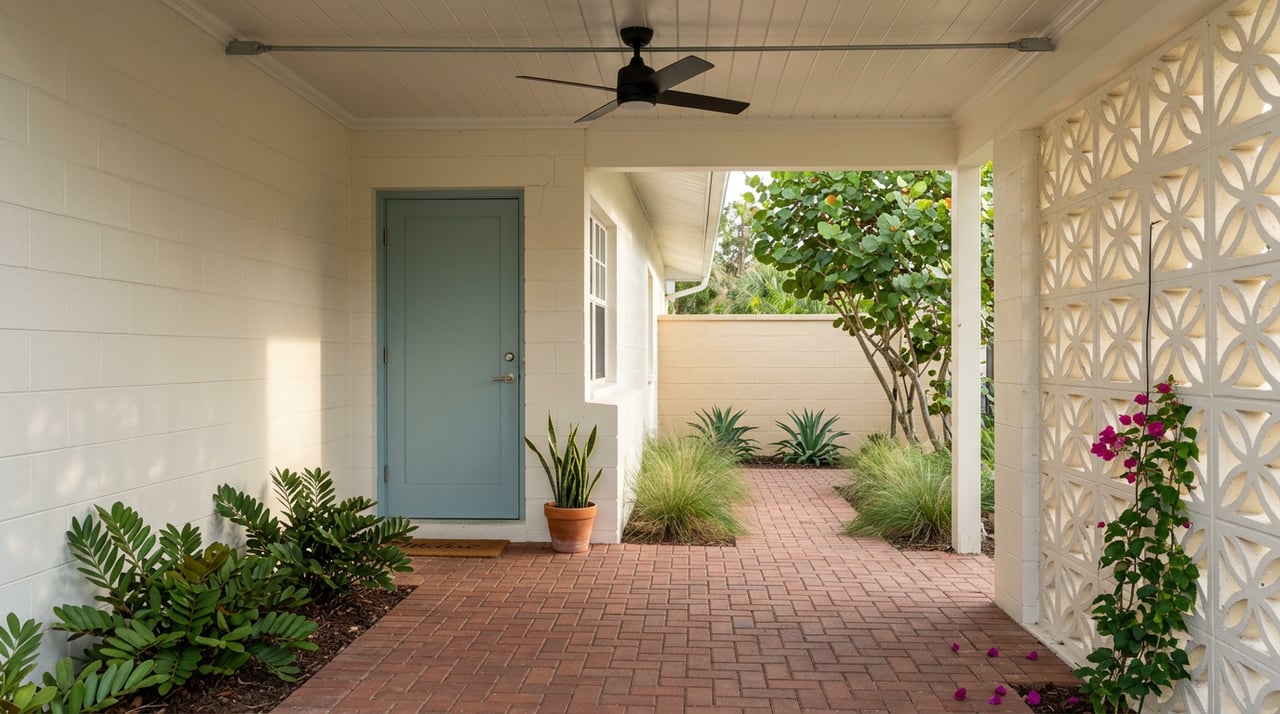
Two bungalows sit four blocks apart on the north side of Central Avenue. Same era, same footprint, same rent roll on a twelve-month lease. One can legally take a booking tonight. The other cannot take a booking shorter than thirty days more than three times a year without inviting a five-figure fine. Nothing about the houses explains the gap. The gap is drawn on two maps most buyers never open before writing an offer.
That is the short-term rental market in St. Petersburg in 2026. The premium a listing agent attaches to an "STR-friendly" address is not really about the neighborhood, the finishes, or the proximity to the water. It is about which side of two overlapping lines your parcel sits on: the city-limits line and the zoning-district line. Get those two right and the math works. Get them wrong and you own a nice long-term rental.
The two lines that decide the whole conversation
Every parcel with a St. Petersburg mailing address answers to one of two regulatory regimes, and they are not similar.
| Regime | Governs | Key rule for stays under 30 days |
|---|---|---|
| City of St. Petersburg | Parcels inside city limits | Allowed only in specific zones; otherwise capped at 3 stays per 365 days |
| Unincorporated Pinellas County | County-jurisdiction parcels with a St. Pete address | Allowed with a Certificate of Use under Ordinance 25-15 |
The Pinellas Property Appraiser record for a given parcel tells you which one applies. That single lookup is worth more than any listing description that uses the phrase "great Airbnb potential."
Inside the city, the zoning district is the whole game
The City of St. Petersburg's ordinance has been on the books since 2001 and essentially bans short-term rentals under 30 days, allowing property owners to rent for less than 30 days only three times a year. Those three stays are not per property forever. They are the annual ceiling for every residential parcel that is not in a hotel-permissive zone.
The exception matters more than the rule. Short-term rentals are generally permitted only in the Downtown Center (DC) and Commercial General (CG) zoning districts, and Residential Traditional (RT) and Residential Suburban (RS) districts do not allow them. A DC or CG designation is why one downtown loft can quote nightly rates on a public calendar and a mid-century block-and-stucco a mile away cannot.
There is a third layer that catches people. The Preservation Area Guidelines overlay imposes additional regulations in certain parts of the city, and condo hotels and other properties located within the PAG overlay must respect stricter rules than those outside it. The overlay does not appear in most MLS remarks. It appears on the city's zoning map, which is where a buyer should be looking before scheduling a second showing.
The 2024 fine change most spreadsheets still ignore
For a long time, the enforcement math inside the city favored the operator. The current fines, usually around $200, were sometimes less than one night's rental rate, and some property owners viewed a city fine as the cost of doing business. That was the underwriting assumption behind a lot of pro forma numbers.
That assumption is stale. Repeat offenders can now face a $10,000 fine, with a state-mandated daily maximum of $1,000 and up to a $10,000 penalty per Code Enforcement Board hearing. The enforcement side has also gotten smarter. Code compliance has observed listings flip from a five-day minimum to a 30-day minimum at the click of a button, with members changing their listing right then and there during outreach. If you are buying a home in an RT or RS zone with the quiet plan of running three "advertised" stays and layering on longer ones off-platform, the ceiling on getting that wrong is now real money.
Unincorporated Pinellas is a different animal
Cross the city-limits line into unincorporated Pinellas and the conversation changes from "am I allowed" to "did I file the paperwork." The Pinellas County Commission adopted a new ordinance for unincorporated areas that establishes a certification process, sets safety and occupancy requirements, and outlines rules on parking, noise and inspections; it applies to properties rented for fewer than 30 days at a time, more than three times per year, and owners must obtain a Certificate of Use.
The specific numbers are worth memorizing before you tour anything in an unincorporated pocket:
- $150 initial inspection fee, with a $100 re-inspection fee if the property does not pass the initial inspection, an annual renewal fee of $450, and a re-inspection required every two years.
- Occupancy capped at two guests per bedroom plus two additional guests in the common area, with a maximum of 10 occupants, and guests of all ages count.
- One off-street parking space per three guests, rounded up, and parking on front lawns does not count toward the minimum.
- Quiet hours from 10 p.m. to 9 a.m.
Timing was tight and remains a live compliance question for any resale. Short-term rental owners could begin applying for their Certificate of Use starting March 31, and had to apply by either May 31, June 30 or July 31, depending on the ZIP code of the rental property. At adoption, an educational campaign was set to sensitize the approximate 2,200 short-term rental owners in unincorporated Pinellas County. The county did not build this in isolation. Host Compliance, a Granicus-owned company, is supporting certificate of use enrollment and the enforcement side going forward. Translation: platform scraping is now part of code enforcement, not just neighbor complaints.
The text of the ordinance sits at Pinellas County's filed Ordinance 25-15 and the program page at pinellas.gov/str. Both are worth reading in full before an offer, not after.
The non-transferability trap
Buyers of turnkey rentals routinely assume the existing license conveys. It does not. Certificates of use are non-transferable and non-assignable, and the certificate of use when issued pertains only to the property owner designated on it for use at the one specific property identified. A closing does not carry the COU. The new owner starts the application, the inspection, and the fee cycle from zero on day one.
This is the friction that catches investors during due diligence. A property under contract as an operating STR can go dark at closing and stay dark until the county issues a new certificate. Model that gap into the first-year cash flow, not the second.
What 2026 pricing is doing to the STR premium
Historically, the premium on a DC or CG parcel was a defensible line item. Nightly revenue in a legal zone justified paying above the citywide median. In 2026, that math is moving.
Over the three months ending May 2026, St. Petersburg's home prices were up 15.1% compared to the same period last year, selling for a median price of $478K. Downtown, where the DC-zoned units concentrate, is doing something different. As of the June 2026 Redfin snapshot, the average Downtown St. Petersburg house price was $747K, down 17.9% since last year. The citywide picture also loosened up. With 4.7 months of inventory across all segments as of June 2026, the market is currently balanced, with supply and demand roughly equal.
Read those three numbers together and the thesis lands. The wider city is still appreciating. The specific downtown pocket where STR-legal zoning concentrates is repricing downward. The premium a seller could ask for a DC-zoned unit two years ago is thinner in 2026, which is the first real opening in a while for an investor to buy the zoning without paying peak dollar for it. Buyers who model the acquisition on last year's comps are pricing the top of the last cycle, not the market they are actually buying into.
The order to work through before you write the offer
The sequence matters. Doing these out of order is how buyers end up under contract on a house that cannot do what they bought it for.
- Pull the parcel record on the Pinellas Property Appraiser and confirm city versus unincorporated jurisdiction.
- If inside the city, pull the zoning designation and check for a PAG overlay on the city's zoning map.
- If unincorporated, confirm current COU status on the Pinellas Access Portal and request the most recent inspection report.
- Request the full condo or HOA declaration and every rental-related amendment. State licensing does not override private governing documents.
- Confirm the seller's DBPR Vacation Rental license number and understand that it does not transfer.
- Register plans for the Pinellas County Tourist Development Tax and Florida sales tax with the Department of Revenue before the first booking, not after.
- Price a first-year vacancy window into the pro forma for the COU application and inspection cycle.
None of these steps require a special relationship. They require knowing which document controls which question, and asking for it in writing before the inspection period closes.
FAQ
If a listing says "zoned for short-term rental," is that enough? No. That phrase usually means the zoning district permits transient use. It does not confirm the PAG overlay, the condo or HOA rental terms, or the current DBPR and BTR status. Ask for the zoning verification letter, the association documents, and the license numbers.
Does an existing Certificate of Use in unincorporated Pinellas convey at closing? No. The certificate is tied to the specific owner and property. A new owner files a new application, pays new fees, and passes a new inspection before operating.
What if the property is inside a condo building in a DC or CG zone? Zoning gets you in the door. The condo declaration decides whether you walk through it. Chapter 718 gives condo associations broad authority to set minimum lease terms, cap turns per year, or prohibit transient stays outright. Read the declaration and the most recent rental amendment before the zoning map.
If you are trying to underwrite a St. Petersburg property against these two maps and the 2026 pricing shift, that is the conversation Drift Home Realty is built for. Schedule a free consultation and we will walk the parcel, the zoning, and the numbers together before you write anything.
